When choosing a handrail, many people focus mainly on its appearance or the material used. However, the overall quality of a handrail system depends on more than the main material alone. A high-quality material can still deliver poor results if the system is manufactured incorrectly, installed inaccurately, or assembled using unsuitable fittings.
The lifespan and efficiency of a handrail are therefore influenced by several connected details, starting with material quality, followed by fabrication and installation, and finally the accessories and fittings that hold the system together.
In this guide, we explore the three essential factors that determine handrail lifespan and performance, with practical points to consider when purchasing, installing, or inspecting a stair handrail system.
1. Material Quality and Its Effect on Handrail Lifespan
The material is the starting point of any handrail system, but material selection should not be based on the material name alone. Choosing aluminum, stainless steel, or another material does not automatically guarantee a high-quality result.
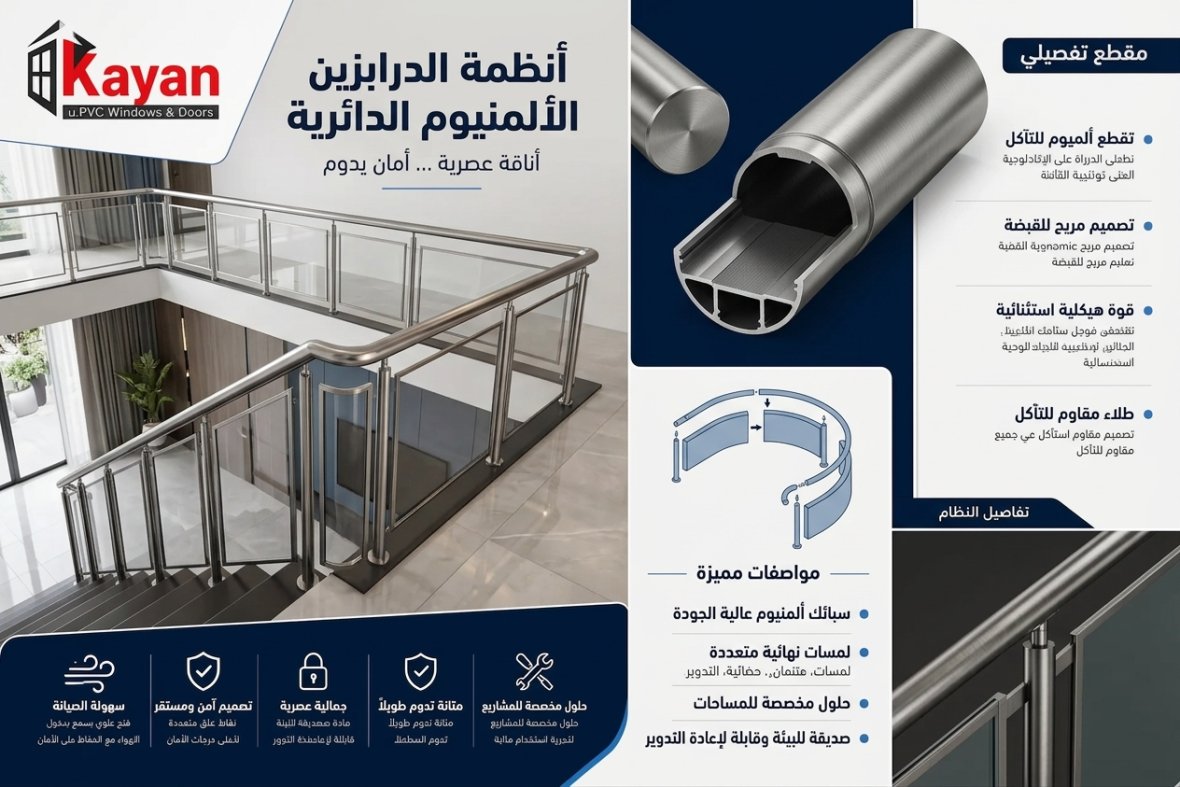
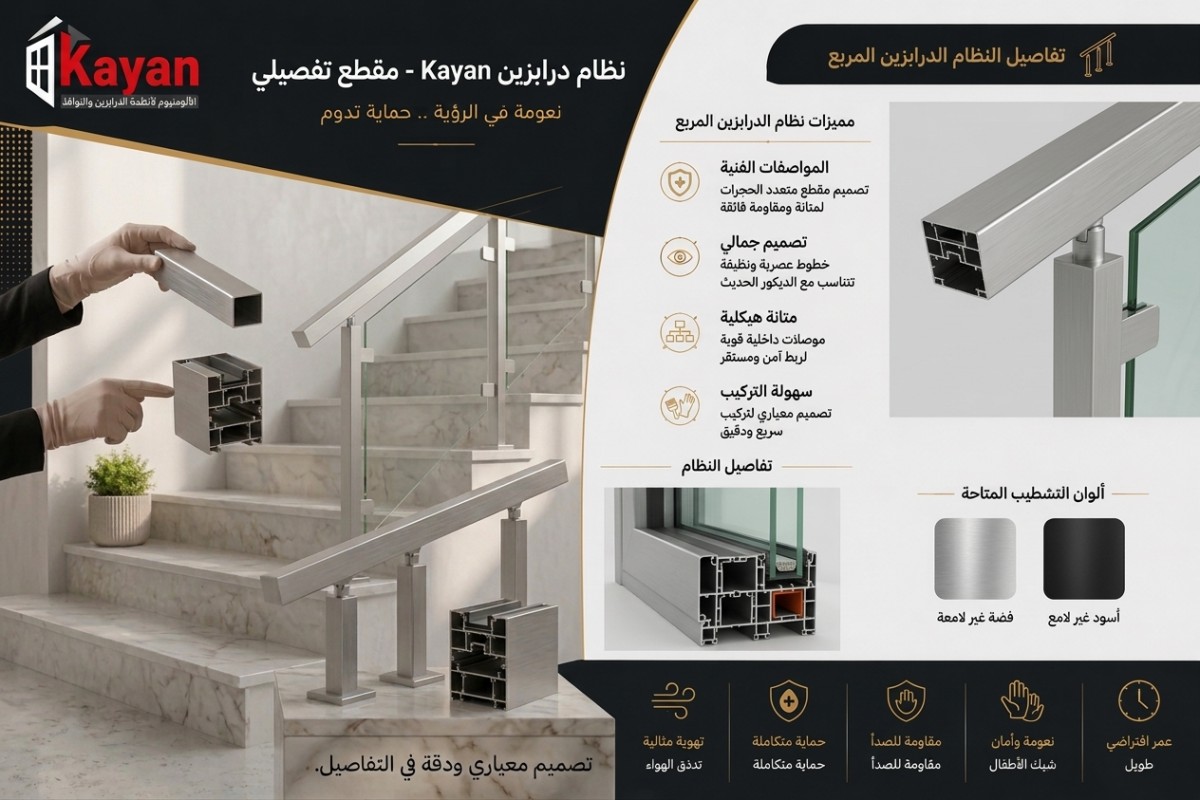
The actual specifications of the material, profile dimensions, thickness, surface finish, and suitability for the intended application can all affect how the handrail performs over time.
A handrail may be exposed to repeated daily use, physical contact, moisture, temperature changes, and other environmental conditions. The material should therefore be selected according to the actual conditions of the project.
Profile Size and Specifications
One important factor is the specification of the profiles used in the handrail system. The appropriate profile dimensions and thickness can contribute to better stability and reduce unwanted movement or deformation during regular use.
This is why appearance alone should not be used to judge profile quality. Some important differences in specifications may not be visible once the system has been installed.
Surface Finish Quality
The surface finish affects both the appearance and the ability of the material to maintain its condition over time. A properly finished surface should have a consistent appearance without obvious defects or unwanted variations.
This becomes particularly important for metal handrails, especially when the system is exposed to demanding environmental conditions or frequent use.
Choosing Material Specifications for the Application
The objective is not simply to choose the material with the highest general specification. Instead, the material should be suitable for the actual project.
A residential staircase may experience different conditions from a commercial building with heavy daily traffic. Understanding the application before selecting the material can therefore lead to a more appropriate and reliable solution.
2. Fabrication and Installation Quality
Even when high-quality materials are used, poor fabrication or installation can reduce the overall efficiency of the handrail. Measurements, cutting, alignment, connections, and fixing points all influence the final result.
A handrail should therefore be treated as a complete system rather than simply a group of components installed beside a staircase.
Accurate Measurements
Good execution begins with accurate measurements. Incorrect dimensions can result in alignment problems, difficult connections, unnecessary modifications, or visible differences between individual sections.
For this reason, the installation area should be inspected and measured before fabrication, especially when the staircase includes corners, changes in direction, or non-standard dimensions.
Alignment Between Components
Handrail components should remain properly aligned in terms of direction, level, and angles. Noticeable differences between sections can affect the appearance and may also indicate inaccurate fabrication or installation.
Alignment becomes particularly important when the design includes long continuous sections, where even small variations can become highly visible.
Fixing Points
Fixing points are among the most important elements of handrail installation because they transfer forces generated during use to the surface supporting the system.
Fixing locations should therefore be carefully planned, and suitable fixing methods should be selected according to the supporting surface and the handrail system.
After installation, the system should be checked to make sure there is no abnormal movement or looseness.
Cutting and Assembly Quality
For systems made from multiple metal sections or components, cutting and assembly accuracy can have a significant effect on the final result.
Inaccurate cuts may create unwanted gaps, incorrect angles, or the need for additional adjustments during installation. This means that handrail quality begins during fabrication, not only at the installation stage.
3. Accessories and Fittings
Handrail accessories and fittings may look like small details compared with the main profiles, but they are an essential part of the complete system.
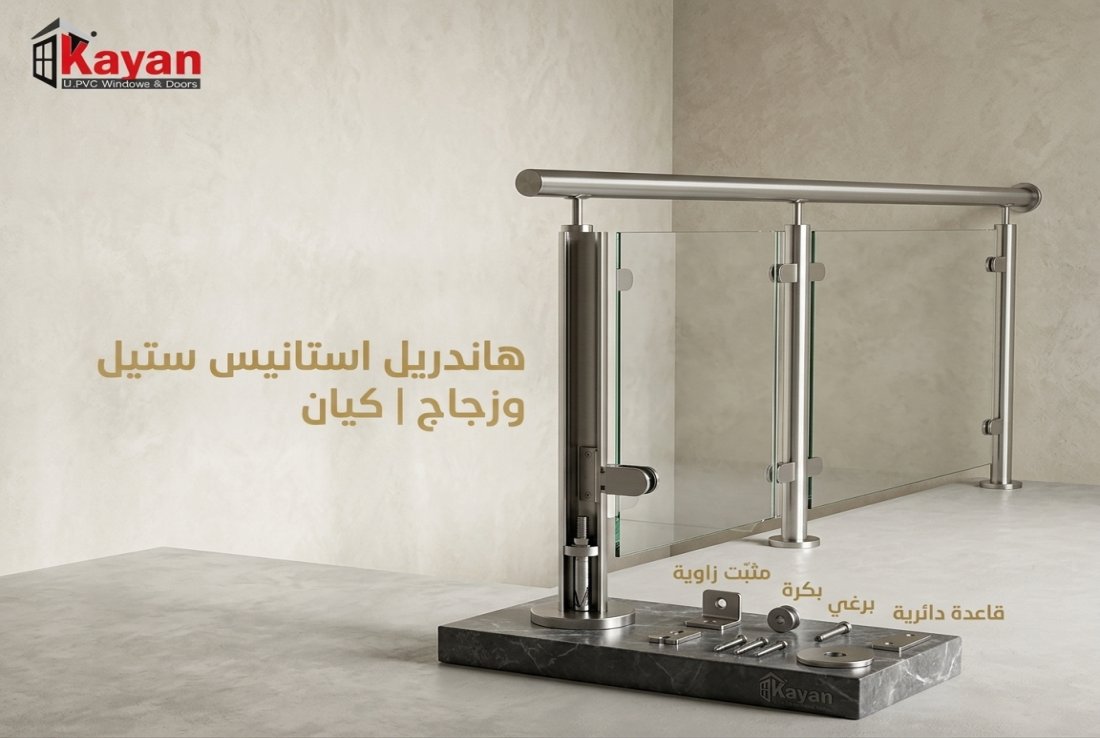
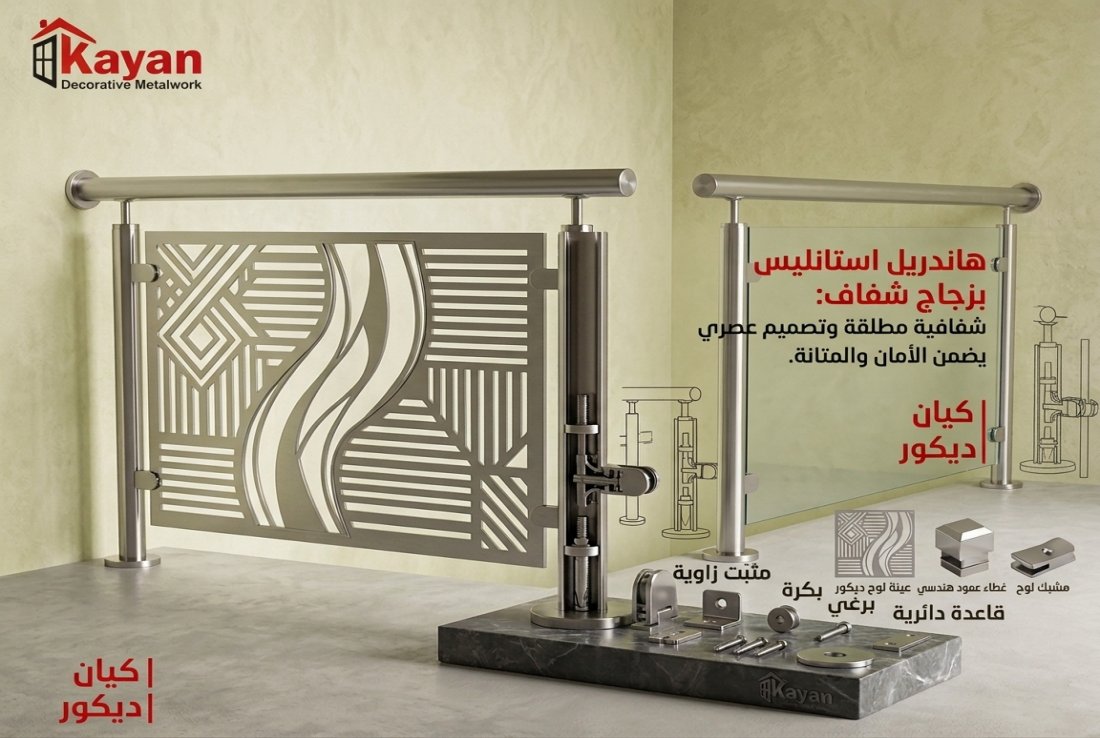
Brackets, bases, connectors, screws, supports, and other fittings should be compatible with the handrail material and appropriate for the intended application.
Brackets and Supports
Brackets and supports help keep the handrail securely positioned. Their selection should take into account the dimensions of the system, the type of material, and the surface where the handrail will be installed.
Using unsuitable supports can reduce system stability even when the main handrail profiles are made from high-quality material.
Connections Between Components
When a handrail consists of several sections, the way these sections are connected is important. Proper connections help maintain continuity and reduce unwanted movement between components.
The fittings should be compatible with both the material and the design instead of being selected simply because they can connect two parts temporarily.
Screws and Fixing Hardware
Fixing hardware may not be visible after installation, but it can have a direct effect on system stability. Screws and other fixing components should be suitable for the material, supporting surface, and environmental conditions.
Reducing the quality of these components simply to lower the project cost can affect the overall performance of the system.
Do Handrail Accessories Affect Its Lifespan?
Yes. A handrail operates as an integrated system. If the main profiles are strong but a bracket, connector, or fixing point is weak, the problem can affect the performance of the entire installation.
This is why handrail quality should not be evaluated by looking only at the visible main section. The components connecting and securing the system are equally important.
How Can You Check Handrail Installation Quality?
When receiving a completed handrail installation, several practical checks can help evaluate the quality of the work rather than relying only on its appearance.
- Check that the handrail is stable and does not move abnormally.
- Inspect the alignment of the sections.
- Check all visible connections and make sure no component is loose.
- Inspect brackets, bases, and fixing points.
- Look for visible defects in the surface finish.
- Make sure the fittings are compatible with the selected material.
- Check corners and connection points between sections.
- Make sure there are no sharp edges or unsafe exposed components.
Why Should You Not Choose a Handrail Based on Price Alone?
The final price does not always reflect the actual quality of a handrail system. Differences may exist in profile specifications, material thickness, accessory quality, fabrication methods, and installation standards.
When comparing quotations, it is therefore better to compare the specifications, components, and installation method rather than looking only at the final price.
A lower quotation may use different specifications or accessories, while another quotation may cost more because it includes different materials, fittings, fabrication standards, or installation requirements.
What Should You Ask Before Installing a Handrail?
Before starting the project, it is useful to request clear information about the proposed system, especially when the handrail will be exposed to frequent or demanding use.
- What material will be used?
- What are the profile dimensions and specifications?
- What type of surface finish will be used?
- How will the handrail be fixed?
- What type of brackets, bases, and connectors will be used?
- Are the accessories compatible with the selected material?
- How will corners and connection points be fabricated?
- Will the installation area be inspected and measured before fabrication?
These questions help turn the buying process into a real comparison between complete systems rather than simply comparing designs and prices.
The Importance of Specialized Fabrication and Installation
A reliable handrail system requires coordination between material quality, fabrication, and installation. Even high-quality components may not perform as expected if they are handled or installed incorrectly.
Working with a specialized handrail company can help reduce measurement, fabrication, and installation errors while ensuring that the selected components are compatible with the requirements of the project.
Complete Handrail Solutions with Kayan Engineering
Kayan Engineering provides handrail and stair railing solutions with attention to the different components that make up the complete system, from material selection to fabrication and installation.
Studying the project requirements and dimensions before fabrication helps determine suitable profile specifications, fittings, accessories, and fixing methods.
When installing a handrail, it is important to evaluate the entire system rather than focusing only on the main profile. The way the components are assembled, connected, and fixed can have a major effect on the final performance.
Conclusion
The lifespan and efficiency of a handrail can be understood through three main factors: material quality, installation and fabrication quality, and the accessories and fittings used.
The material provides the foundation, while accurate fabrication and installation determine how effectively that material performs. Accessories and connections complete the system by securing and linking its different components.
Therefore, when purchasing or installing a handrail, do not evaluate the system only by its appearance or material name. Ask about the actual specifications, fabrication process, fixing method, and accessories included in the system.
This approach makes it easier to compare options accurately and select a handrail system designed to provide reliable stability and performance over the long term.
Frequently Asked Questions
What is the most important factor affecting handrail lifespan?
Handrail lifespan is not determined by one factor alone. It depends on material quality, fabrication and installation accuracy, and the quality of the fittings and connections.
Is good material quality enough to guarantee a good handrail?
No. Even high-quality materials require accurate fabrication and installation, along with suitable brackets, connectors, and fixing hardware.
Are handrail accessories really important?
Yes. Accessories are responsible for connecting and securing different parts of the system, and their quality can affect stability, performance, and service life.
Can handrail quality be judged by appearance alone?
Not always. Some of the most important quality factors are found in the fixing points, connections, internal specifications, and installation method.
Does a lower price mean lower handrail quality?
Not necessarily. However, quotations should be compared based on material specifications, accessories, fabrication, installation, and included components before evaluating the price difference.
When should a handrail be inspected after installation?
The system should be checked during final handover to confirm stability, alignment, connection quality, fixing points, surface finish, and the absence of abnormal movement or visible defects.