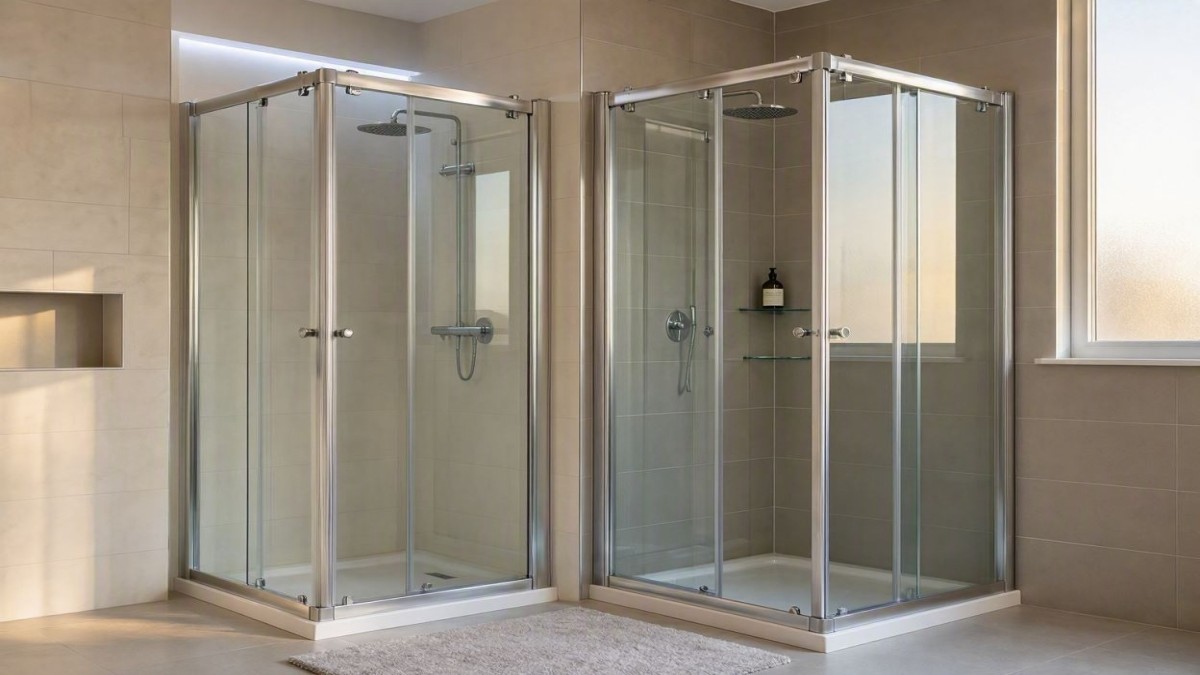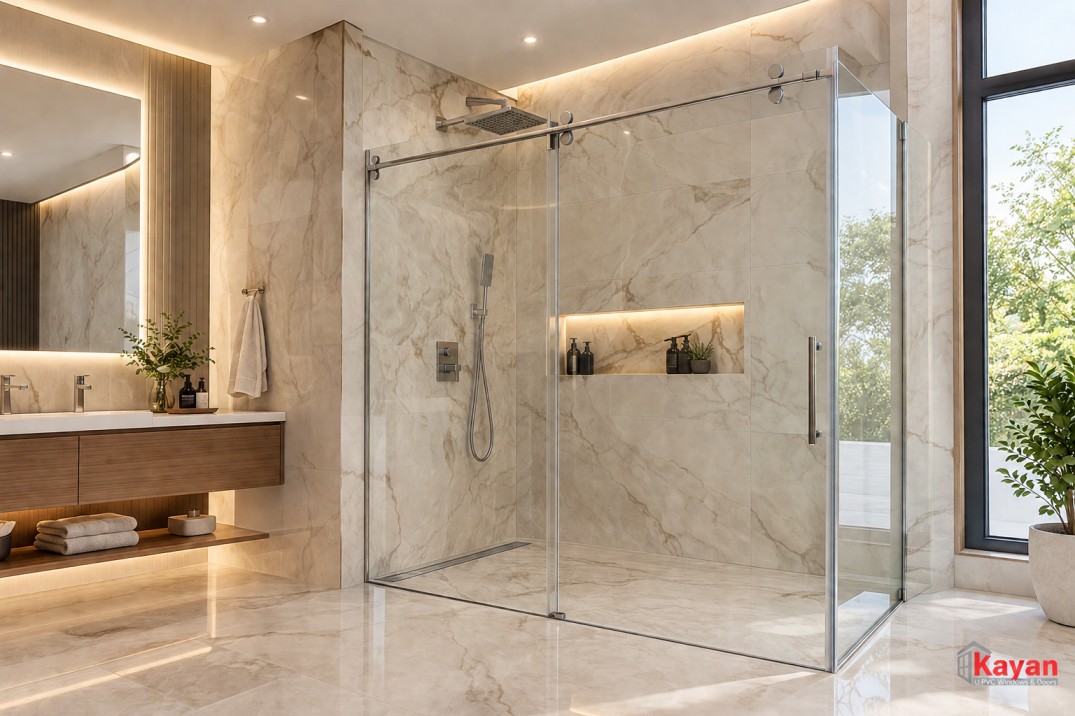
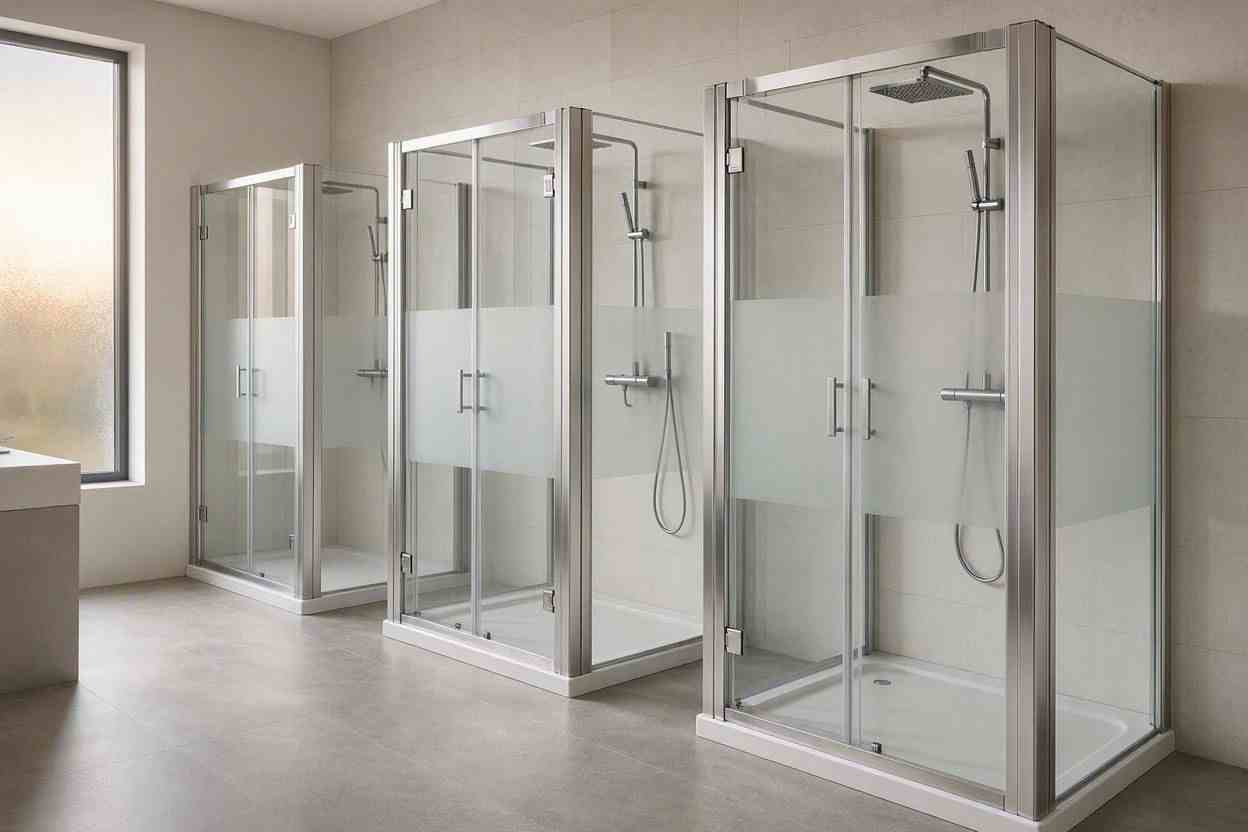
Choosing a shower enclosure is not only about the appearance of the glass or the finish of the hardware. The opening system can have a direct impact on how comfortable and practical the bathroom feels every day. Two of the most common options are hinged and sliding shower enclosures, and each system has different space and installation requirements.
A hinged enclosure may work well when there is enough clearance for the door to swing comfortably, while a sliding enclosure can be useful when the space in front of the shower area is limited. The right choice therefore depends on the layout of the bathroom, the available clearance, the intended use, and the overall design.
This guide explains the practical differences between hinged and sliding shower enclosures and the factors that should be considered before choosing one for your bathroom.
What Is the Difference Between Hinged and Sliding Shower Enclosures?
The main difference between the two systems is how the shower door moves.
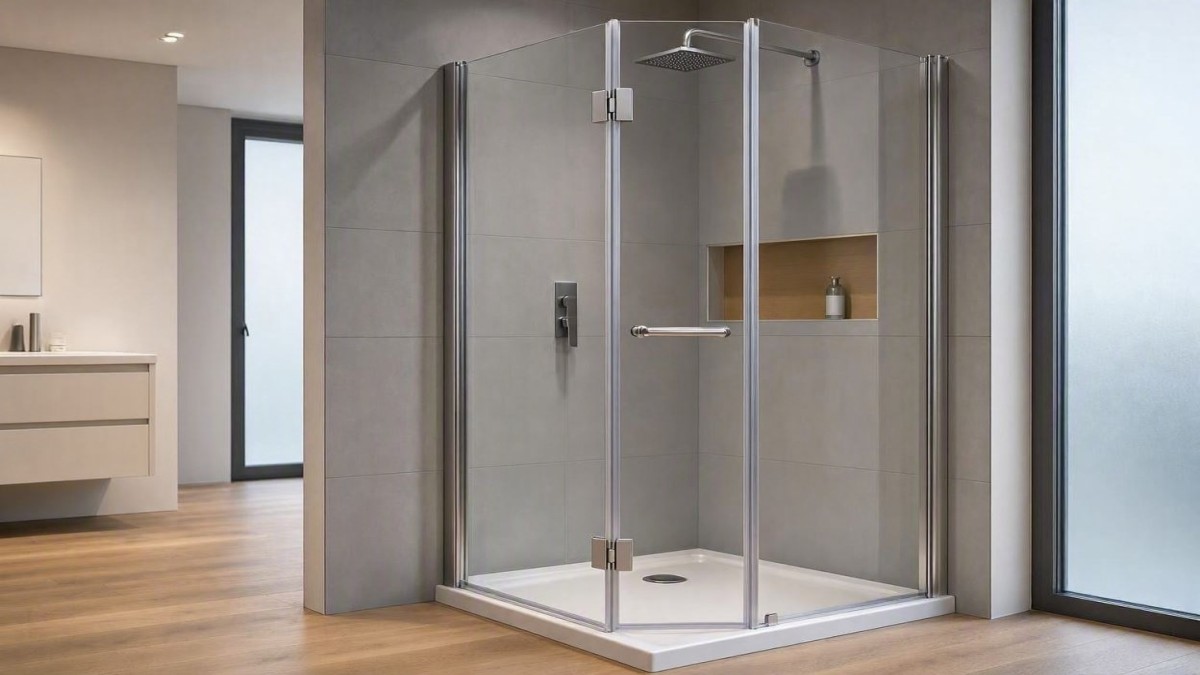
A hinged shower door rotates around a fixed axis using hinges, which means it requires enough clearance for the door to open and close.
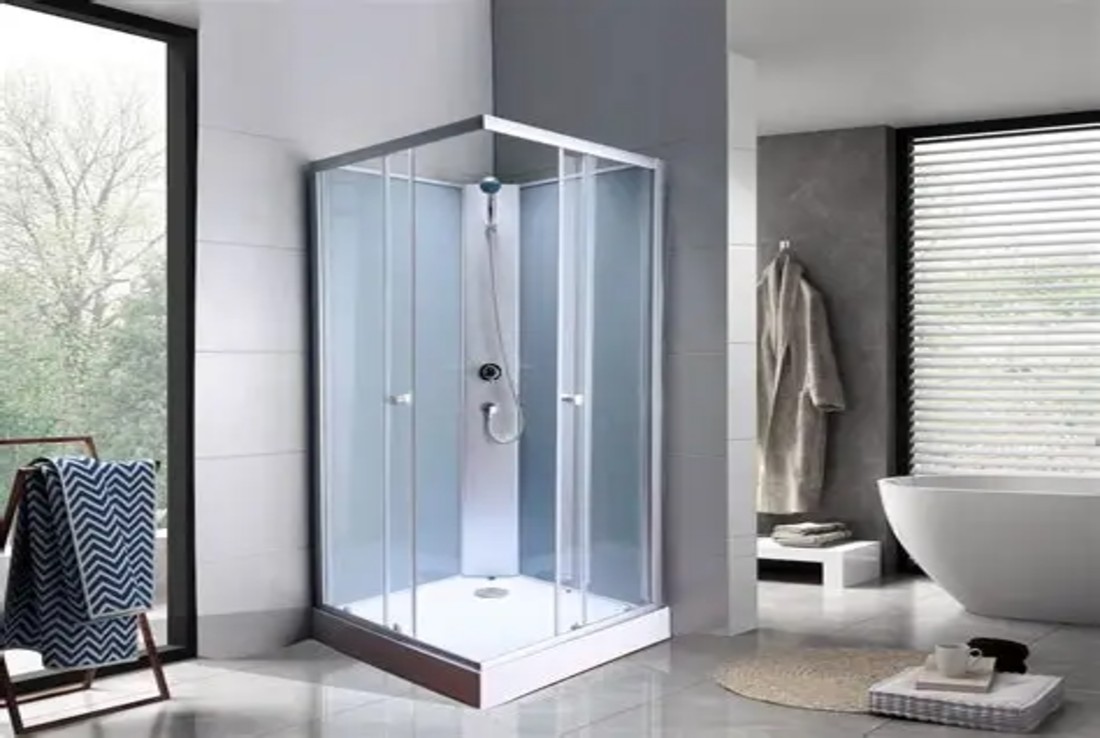
A sliding shower door moves horizontally along a dedicated track instead of swinging into or out of the bathroom.
This difference in movement can significantly affect the final design, especially when the shower area is close to other bathroom fixtures.
When Is a Hinged Shower Enclosure Suitable?
A hinged enclosure can be suitable when there is sufficient space in front of the shower door for comfortable movement.
It provides a direct entrance into the shower area and can be designed with a clean and minimal appearance using glass panels, hinges, handles, and suitable fixing hardware.
However, the door swing should always be checked before fabrication because a nearby toilet, vanity, bathroom door, or other fixture may interfere with the opening path.
Clearance in Front of the Enclosure
One of the most important points when considering a hinged door is the clearance available in front of the enclosure.
If the door opens outward, the surrounding area must provide enough room for the door to move without hitting another bathroom element.
Access to the Shower
Depending on the design and dimensions, a hinged door can provide a clear and comfortable entrance to the shower area. This can be useful in bathrooms where enough space is available for the door swing.
When Can a Sliding Shower Door Be More Practical?
A sliding door becomes an important option when there is limited clearance in front of the shower enclosure.
Instead of requiring space for the door to swing inward or outward, the sliding panel moves along its track. This can make the area in front of the enclosure easier to use for circulation or for positioning other bathroom fixtures.
However, sliding systems depend on tracks, rollers, and movement hardware, so the quality and installation of these components are important.
Small Bathrooms
In a small bathroom, reducing the space required for door movement can be an important consideration.
A sliding enclosure can help make the layout more flexible, particularly when the shower is located close to a vanity, toilet, or bathroom entrance.
Larger Bathrooms
Larger bathrooms provide more flexibility and may accommodate either system.
The choice in this situation can depend more on the overall layout, preferred appearance, accessibility, and the way the bathroom will be used.
Comparing Space Requirements
When comparing hinged and sliding systems, it is important to consider the clearance required for the door rather than looking only at the size of the shower area.
A hinged door requires a defined swing area, while a sliding door uses horizontal movement along the enclosure.
This means that a bathroom may have a sufficiently large shower area but still be unsuitable for a hinged door if another fixture occupies the door's movement path.
On the other hand, when there is enough open space in front of the enclosure, a hinged system can be a practical and straightforward solution.
What About Everyday Usability?
The way the enclosure will be used every day should also be considered before choosing the opening system.
A hinged door provides direct movement through its hinges, while a sliding door depends on rollers and a track to move the glass panel.
The system should therefore be evaluated not only by how it looks when first installed, but also by how easy it is to operate repeatedly.
Hardware Quality Matters in Both Systems
Hardware is an important part of both hinged and sliding shower enclosures, but the key components are different.
For a hinged system, hinges, handles, and fixing points are among the main components that require attention.
For a sliding system, rollers, tracks, handles, connectors, and other movement components become particularly important because they are used repeatedly.
A good glass specification alone does not guarantee a reliable enclosure if the hardware is not appropriate for the glass weight and the overall design.
Which System Is Easier to Maintain?
Maintenance access should be considered when selecting the enclosure system.
Some components of a hinged system can be relatively easy to access, while a sliding enclosure includes tracks and rollers that should be kept clean and properly maintained.
This makes the design of the sliding track important, particularly in a bathroom environment where water, soap, and residue can accumulate.
Design and Appearance
Both hinged and sliding shower enclosures can be designed to fit modern bathroom interiors.
The decision should not be based only on the visual appearance of the opening system. The enclosure should also work naturally with the rest of the bathroom layout.
Clear glass, for example, can create a more open visual effect, while the glass finish, hardware, and other details can be selected to complement the bathroom's interior design.
When Might a Hinged Door Not Be the Right Choice?
A hinged door may not be practical when the area in front of the enclosure is too limited or when nearby fixtures interfere with the door swing.
Choosing a hinged door simply because its appearance is attractive can lead to an impractical result if the actual movement area has not been checked.
For this reason, the bathroom layout should be studied before the final design is approved.
When Might a Sliding Door Not Be the Right Choice?
Although sliding doors can be practical in many situations, the system still needs to be matched to the dimensions and intended use of the enclosure.
A sliding system depends on additional movement components such as tracks and rollers, so their quality and suitability for the glass dimensions and weight should be considered before fabrication.
The track should also be designed in a way that allows practical cleaning and access to the movement components when maintenance is required.
How Should You Compare the Two Systems?
Instead of asking which system is universally better, compare the two options according to the actual requirements of your bathroom.
- If clearance in front of the enclosure is limited, consider a sliding system.
- If there is sufficient space for door movement, a hinged system can be considered.
- If the shower is close to other fixtures, carefully check the door movement path.
- For sliding systems, pay attention to the quality of rollers and tracks.
- For hinged systems, pay attention to hinges and fixing points.
- In both systems, make sure the hardware is suitable for the glass dimensions and weight.
- Compare specifications rather than relying only on the final price.
- Confirm the technical details before the glass is fabricated.
Why Accurate Measurements Matter
Accurate measurements help determine whether a hinged or sliding system is more suitable for the available space.
The measurement process should consider the width of the shower area, the clearance in front of it, and the position of the vanity, toilet, bathroom door, and other nearby elements.
Fixing points and final dimensions should also be established before glass fabrication because changing the design after fabrication can be more difficult.
Look at the Whole Bathroom, Not Only the Shower Area
One common mistake is to evaluate the shower area separately from the rest of the bathroom.
The shower area may be large enough for a hinged enclosure, for example, but a nearby bathroom door could interfere with the swing. Similarly, a vanity or toilet may reduce the available clearance.
For this reason, the movement of the user throughout the bathroom should be considered before approving the final enclosure design.
Shower Enclosures by Kayan Engineering
Kayan Engineering provides glass shower enclosure solutions designed around the requirements of different bathroom layouts.
The suitable opening system can be determined by studying the shower dimensions and surrounding space, then selecting the appropriate opening method, glass, hardware, and fixing details.
Whether the project requires a hinged door or a sliding system, the objective is to create a shower enclosure that combines practical use, suitable design, and reliable execution.
Conclusion
The choice between a hinged and sliding shower enclosure is not about selecting one system as universally better. It depends on the bathroom layout, available clearance, and how the enclosure will be used.
If there is enough space for the door to swing comfortably, a hinged system may be suitable. If the available clearance is limited and reducing the door's movement area is important, a sliding system may be worth considering.
In either case, accurate measurements, suitable glass, quality hardware, proper fixing, and professional installation remain important parts of the final result.
Contact Kayan Engineering to review your bathroom space and determine the shower enclosure system that fits your layout before fabrication and installation.
Frequently Asked Questions
Which is better, a hinged or sliding shower enclosure?
The choice depends on the bathroom layout, available clearance, and intended use. A hinged door needs space for its swing, while a sliding door moves horizontally along a track.
Is a sliding shower door suitable for a small bathroom?
It can be a practical option for many small bathrooms because it does not require the same front clearance as a swinging hinged door.
Can a hinged shower door be used in a small bathroom?
It can be used if there is enough room for the door to open without interfering with other bathroom fixtures. Accurate measurements are therefore important before fabrication.
Does a sliding shower enclosure require maintenance?
Like any moving system, it benefits from keeping the track clean and checking the rollers and hardware when necessary to maintain smooth operation.
Can hinged and sliding shower enclosures be made to measure?
Yes. Shower enclosures can be designed according to the actual dimensions of the space, with the opening method, fixing points, glass, and hardware determined before fabrication.