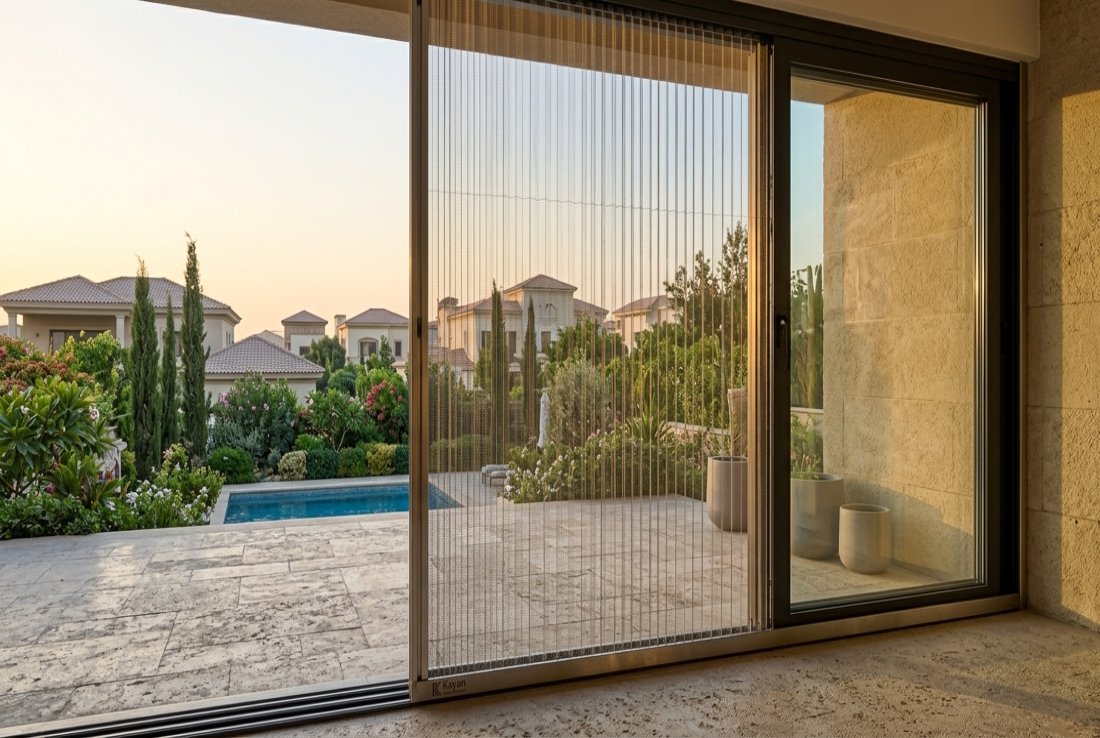
Opening windows and doors can provide fresh air and natural daylight, but it can also create an opportunity for insects to enter the space. Keeping every opening closed is not always practical, especially in areas that depend on natural ventilation during the day. This creates a need for a solution that allows the opening to remain useful while providing a suitable insect barrier.
A pleated screen can help create this balance. Its mesh allows air and daylight to pass through while covering the opening when protection from insects is needed. The screen can also be folded and gathered when the opening needs to be used more freely.
Why Is This Balance Important?
Windows and doors influence how a space is used throughout the day. At certain times, natural ventilation may be the priority, while at other times keeping insects outside becomes more important.
Natural daylight is also an important part of many residential and commercial spaces. Rooms, kitchens, offices, and other areas may rely on windows as a source of daylight, making it useful to have a solution that does not require the opening to remain completely closed.
Instead of choosing between an open opening and insect protection, a pleated screen can provide a more flexible way to use the same window or door.
How Does a Pleated Screen Support Natural Ventilation?
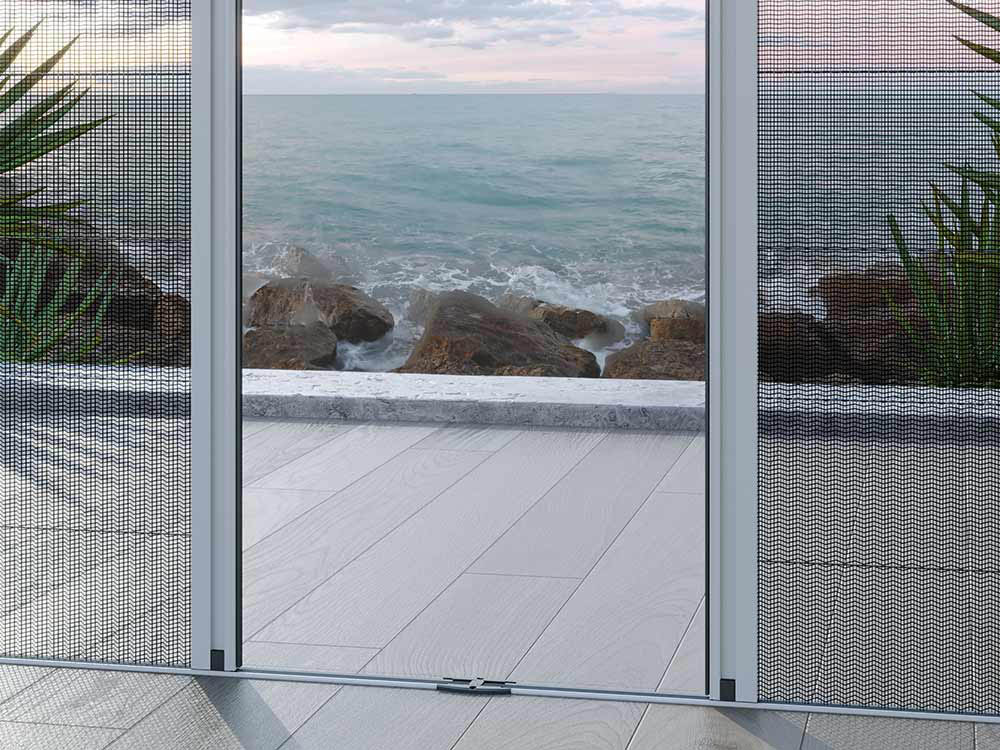
When the pleated screen is closed, the mesh remains across the opening instead of blocking it with a solid panel. This allows air to move through the mesh while the screen acts as a barrier against insects.
This means a window or door can remain open for ventilation while the screen is positioned across the opening. The result is a more practical way to benefit from natural airflow without leaving the opening completely exposed.
This can be particularly useful in rooms where fresh air is needed regularly or where natural ventilation is an important part of everyday use.
The Role of Pleated Screens in Natural Daylight
Airflow is not the only benefit of keeping an opening usable. Natural daylight is another important consideration, especially in rooms with large windows or glass doors.
A mesh screen allows daylight to continue reaching the space while the opening is covered. This means the screen can be used during the day without necessarily turning the window or door into a completely closed element.
The actual amount of daylight reaching the room depends on several factors, including the opening size, glass type, screen design, and location of the window or door. Therefore, the screen should be considered as part of the complete opening rather than as an isolated component.
Keeping Insects Outside While the Opening Stays Open
One of the most common situations where a pleated screen becomes useful is when occupants want to open a window or door while reducing the possibility of insects entering the space.
When the mesh is extended across the opening, it provides a screen between the indoor and outdoor areas while still allowing air to pass through. This makes it possible to use the opening for ventilation without leaving it completely unprotected.
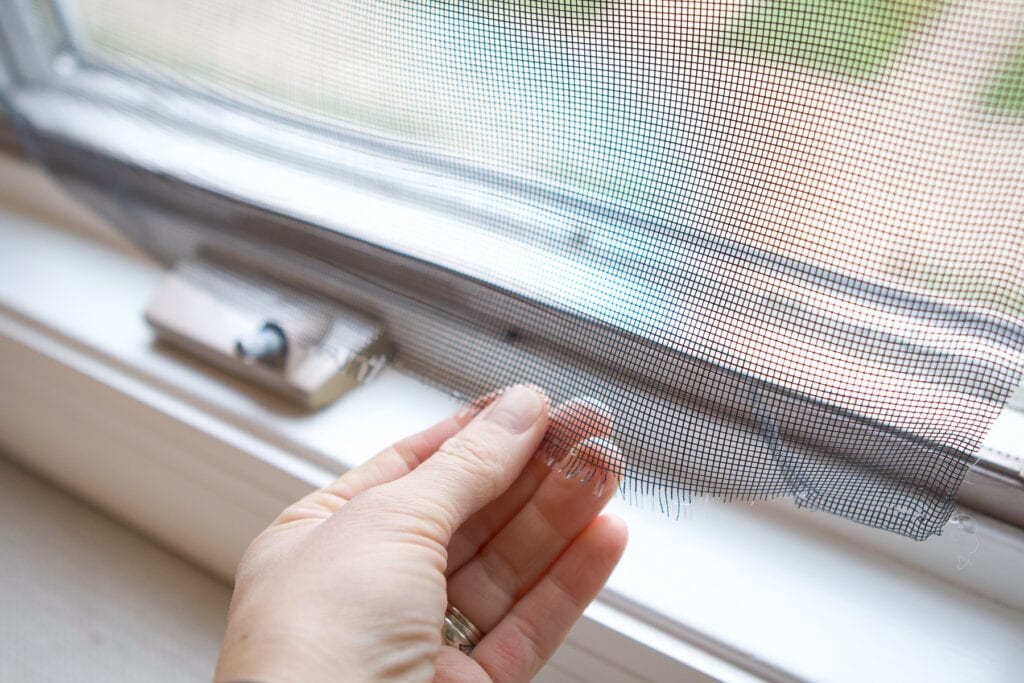
A screen should not be considered a guarantee against every type of insect under every condition. The result depends on the quality of the mesh, the accuracy of manufacturing, and how well the frame is fitted around the opening.
Pleated Screens for Windows
For windows, a pleated screen can be useful in areas where the window is opened frequently for natural ventilation. The window can remain open while the screen stays in position across the opening.
This can help provide fresh air while maintaining a mesh barrier against insects. It can also allow daylight to continue entering the room through the screened opening.
The system should be selected according to the window dimensions and opening method so that it does not interfere with normal everyday operation.
Pleated Screens for Doors and Outdoor Openings
Doors have different requirements because they are often part of a movement path between indoor and outdoor spaces. For this reason, ease of movement and the ability to gather the screen can become particularly important.
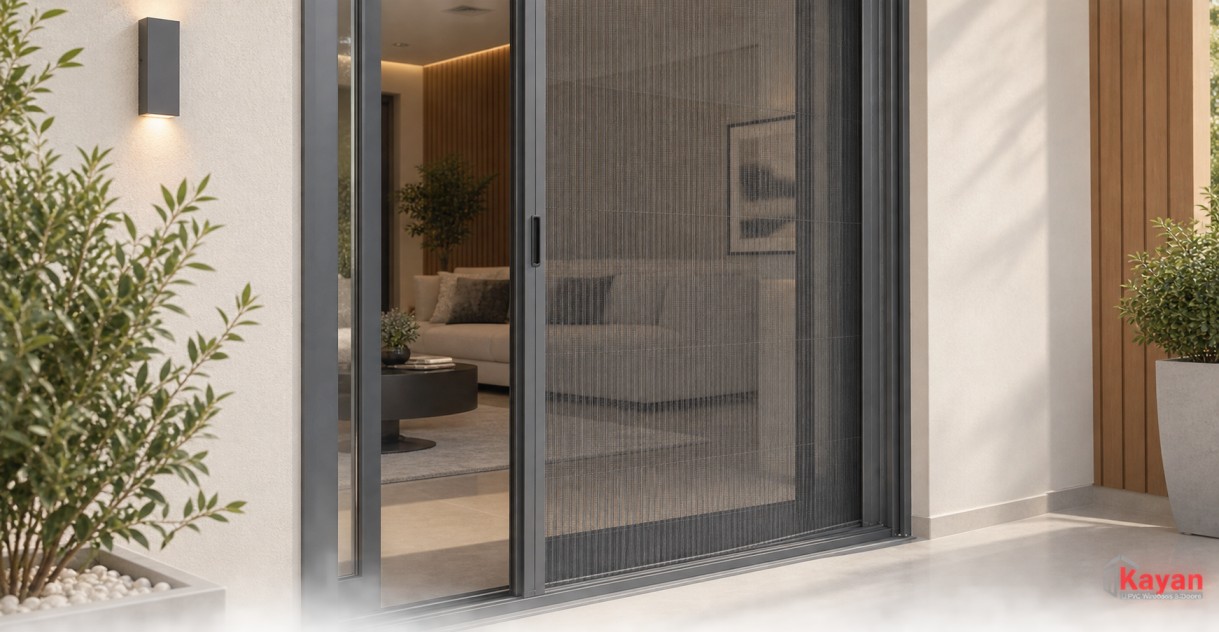
When the door needs to be used as a completely open passage, the pleated mesh can be folded and gathered instead of remaining across the opening. When the door is kept open for ventilation, the screen can be extended to provide an insect barrier.
This can be useful for balcony doors, garden-facing doors, and other openings that connect the interior with outdoor areas, provided that the design is suitable for the dimensions and daily use of the opening.
How Can You Maintain Natural Airflow Without Losing Practicality?
Using natural ventilation does not necessarily mean leaving windows and doors completely exposed throughout the day. The way the opening is used can change according to the time and the needs of the space.
- Open the window or door when fresh air is needed.
- Keep the pleated screen extended while the opening remains open.
- Gather the screen when the full opening is needed for movement.
- Continue benefiting from daylight while the mesh covers the opening.
- Close the opening completely when ventilation is no longer required.
This makes the screen part of the way the space is used rather than simply being an additional fixed element on the window or door.
How Does the Mesh Design Affect Air and Light?
The mesh is the main part of the system responsible for creating a barrier while keeping the opening visually and physically permeable. Its quality and design therefore influence everyday use.
The mesh area and manufacturing quality should also be appropriate for the dimensions of the opening. The decision should not be based only on appearance, but also on the required function and ease of operation.
For this reason, the location, opening dimensions, and expected usage should be considered before selecting the final screen system.
Do Different Rooms Have Different Requirements?
Yes. The balance between ventilation, daylight, and insect protection can vary from one room to another.
Living Rooms
Living rooms may need windows to remain open for extended periods to benefit from natural air and daylight. A suitable screen can allow the opening to remain usable while reducing exposure to insects.
Kitchens
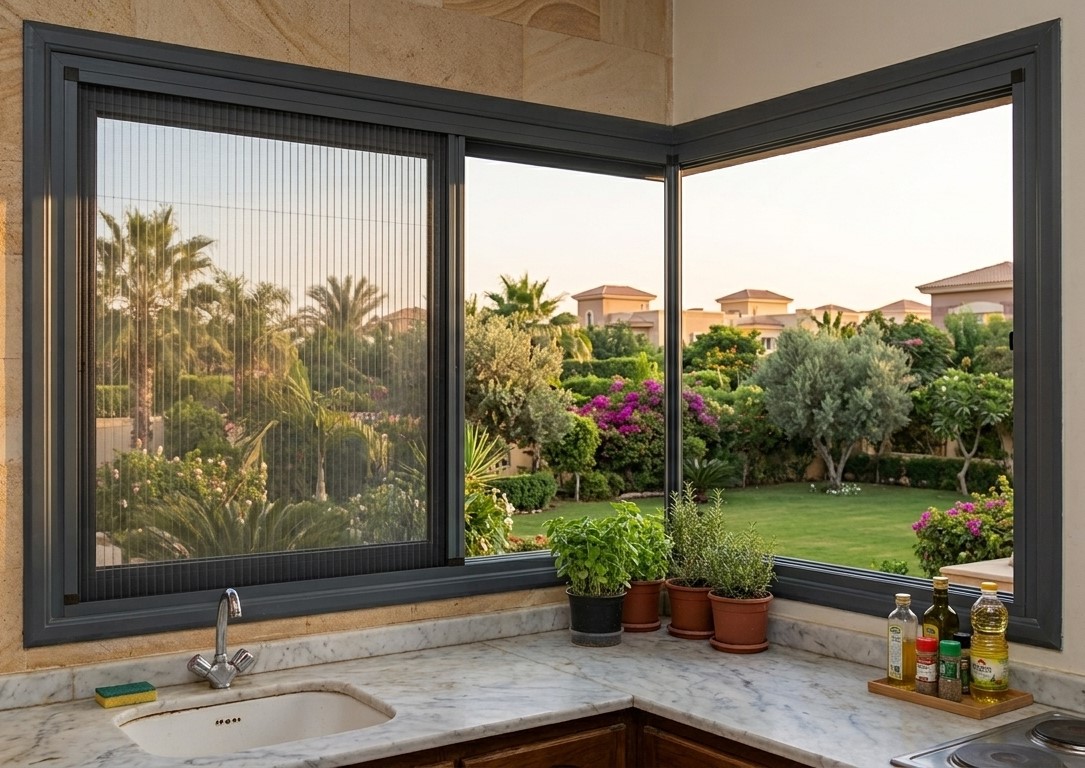
Kitchens often require good ventilation, particularly while cooking. At the same time, opening a kitchen window can allow insects to enter. A pleated screen can therefore be considered where natural ventilation is needed without leaving the opening completely exposed.
Bedrooms
Bedrooms may benefit from natural airflow while occupants may still want the opening to remain protected. A pleated screen can allow the window to stay open while the mesh provides a barrier.
Balconies and Exterior Doors
For doors connecting indoor spaces with balconies, gardens, or other exterior areas, the ability to move and gather the screen becomes particularly important, especially when the door is used several times during the day.
When Is a Folding Screen System Useful?
A folding design becomes particularly useful when an opening needs to be fully accessible at certain times and covered with a screen at other times.
For example, a door may need to be opened completely when people are passing through or when large objects are being moved. At other times, the door may remain open for ventilation while the screen is extended to reduce insect entry.
This flexibility is one of the reasons pleated screens can be suitable for openings that have different requirements throughout the day.
What Affects the Performance of a Pleated Screen?
The effectiveness of the system does not depend on the mesh alone. Several components work together to determine the overall experience.
- Accurate measurements of the window or door.
- Quality of the screen mesh.
- Quality of the frame and system components.
- Correct installation within the opening.
- Compatibility with the opening method of the door or window.
- Smooth movement and folding of the screen.
- A properly fitted frame with unnecessary gaps minimized.
These factors can influence how effectively the system supports ventilation, insect protection, and everyday usability.
How Should You Choose a Pleated Screen for Your Space?
Before choosing a system, it is useful to identify the main purpose of the screen. Is ventilation the main priority? Is the opening used frequently? Is there limited space around the window or door? Does the opening need to be completely accessible at certain times?
Answering these questions can help determine a suitable solution instead of choosing a system based only on its appearance.
The opening dimensions, location, and daily usage should also be considered. A solution suitable for a small window may not necessarily be the same solution required for a wide exterior door.
Why Does Installation Quality Matter?
Even a suitable screen can perform differently if the installation is not accurate. Incorrect measurements or poor fitting may affect the movement of the mesh or create unnecessary gaps around the frame.
Manufacturing the system according to the actual opening dimensions and installing it correctly can therefore help achieve the intended balance between ventilation, insect protection, and ease of use.
Pleated Screens from Kayan Engineering
Kayan Engineering provides pleated screen solutions for openings that require a balance between natural ventilation, insect protection, and efficient use of available space.
The appropriate solution can be determined according to the type of window or door, opening dimensions, operating method, and specific requirements of the space. This allows the screen to become a functional part of the opening rather than simply an additional visual element.
If you want to keep windows or doors open to benefit from natural air and daylight while maintaining a mesh barrier against insects, a pleated screen can be considered according to the requirements of your space.
Conclusion
Maintaining natural ventilation and daylight while reducing insect entry requires a flexible way to use windows and doors. A pleated screen can help achieve this by allowing the opening to remain open while the mesh is positioned across it when protection is needed.
The final result depends on the type of opening, mesh quality, accurate measurements, installation, and everyday usage. Choosing the right pleated screen therefore starts with understanding how the space and opening will actually be used rather than focusing only on the appearance of the system.
Frequently Asked Questions About Pleated Screens and Ventilation
Does a pleated screen allow air to pass through?
Yes. The mesh is designed to allow airflow through the screened opening, making it suitable for windows and doors that are kept open for natural ventilation.
Does a pleated screen affect natural daylight?
The mesh allows daylight to pass through, although the amount of light reaching the room also depends on the opening size, glass type, location, and screen design.
Can pleated screens be used with doors?
Yes. They can be used with certain types of doors, particularly where ventilation and insect protection are both required. The suitable system depends on the door dimensions and operating method.
Does a pleated screen prevent all insects from entering?
It helps reduce insect entry when closed. The level of protection depends on the mesh quality, manufacturing accuracy, and how accurately the screen frame is installed.
Can the door be fully opened when a pleated screen is installed?
With folding pleated systems, the mesh can be gathered when full access through the opening is required. The exact operation depends on the system design and installation.
Are pleated screens suitable for kitchens?
They can be suitable for kitchens that require natural ventilation, especially where windows are opened frequently. The appropriate system should be selected according to the opening dimensions and usage.
What is important for maintaining pleated screen performance?
Accurate measurements, good-quality mesh and frame components, and proper installation are important factors in maintaining smooth operation and achieving the intended function of the system.