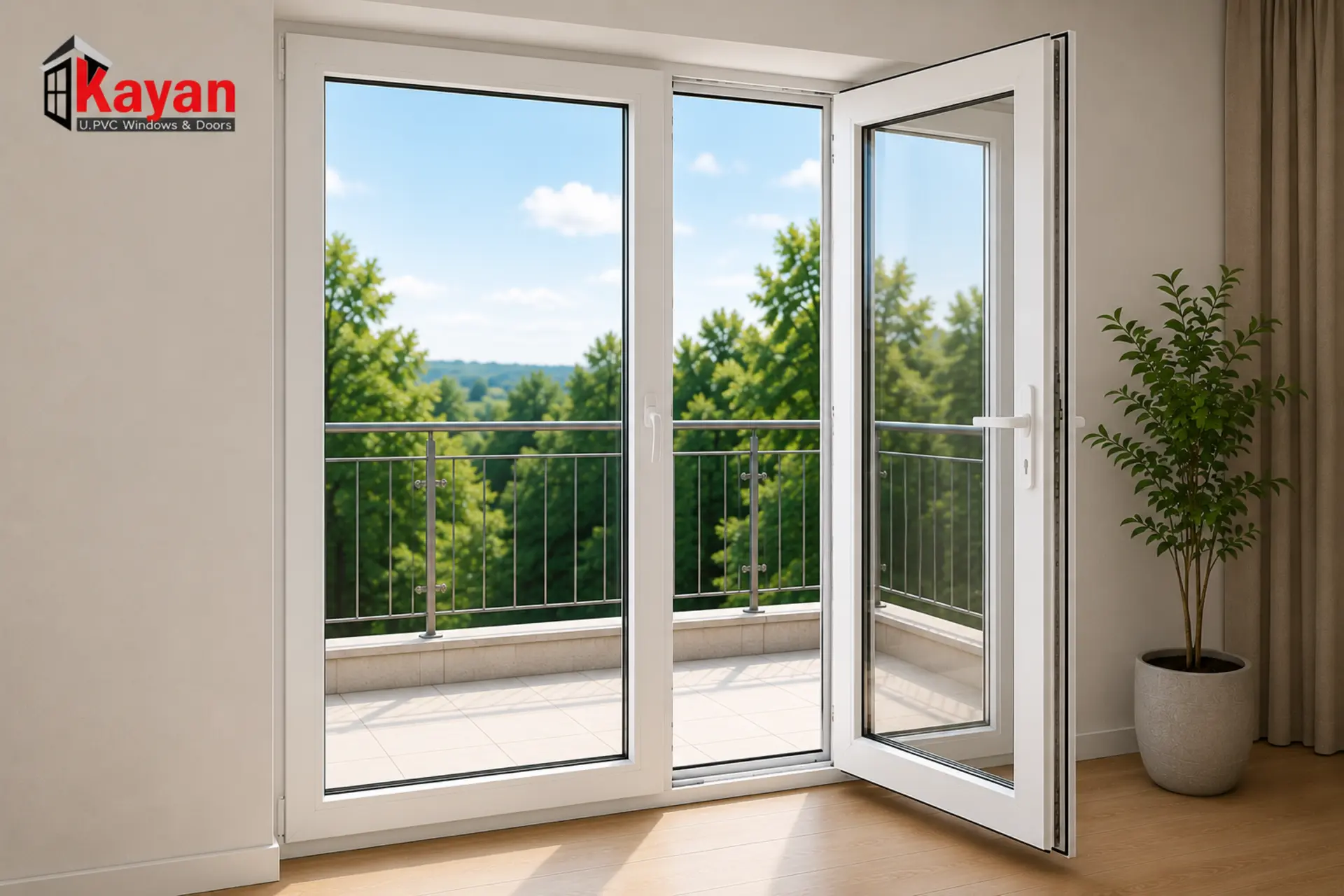
When choosing UPVC doors and windows, appearance and price are not enough to determine whether a system is truly suitable for your project. The quality of the final product depends on several technical and manufacturing details that can affect its stability, operation, durability, and overall performance.
Different UPVC systems may look similar from the outside while having important differences in profile specifications, internal reinforcement, glass, hardware, sealing components, manufacturing accuracy, and installation quality. These differences may not always be visible at first, but they can become more noticeable during everyday use.
For this reason, understanding how to evaluate UPVC doors and windows quality before purchasing can help homeowners and project owners compare different products and quotations more accurately.
In this guide, we explain 5 important factors that determine the quality of UPVC doors and windows, along with the key details you should check before approving an order.
What Does UPVC Doors and Windows Quality Mean?
The quality of a UPVC system is not determined by its appearance alone. A properly designed system should have compatible components that work together to provide the required level of performance.
A UPVC window or door usually consists of the profile, glass, hardware, seals, reinforcement where required, and other components. The final result also depends on manufacturing accuracy and installation quality.
Therefore, when evaluating UPVC quality, it is important to look at the complete system rather than focusing on a single component.
Factor 1: UPVC Profile Specifications
The UPVC profile forms the main structure of the window or door, making its specifications one of the first things to check before purchasing.
UPVC profiles can differ in dimensions, internal chamber design, wall thickness, construction, and technical specifications. Therefore, simply knowing that a product is made from UPVC does not provide enough information about its quality.
When comparing different systems, ask about the profile type, dimensions, specifications, and whether it is suitable for the size and intended use of the opening.
The requirements of a small residential window may be different from those of a large entrance door or a wide opening, so the profile should be selected according to the actual application.
Why Are Profile Specifications Important?
The profile affects the structure, appearance, assembly method, and compatibility with other system components such as glass and hardware.
For this reason, a quotation should clearly identify the profile specifications rather than simply stating that the product is a UPVC window or door.
Factor 2: Glass Quality and Specifications
Glass is an essential part of a UPVC window system, so the quality of the window should not be evaluated based on the profile alone.
Glass options can differ in thickness, number of layers, processing, and technical properties. Two windows with a similar external appearance may therefore have different specifications because of the glass used.
When comparing UPVC quotations, ask for clear information about the glass type and specifications instead of simply confirming that glass is included.
The appropriate glass should be selected according to the location, project requirements, light levels, thermal conditions, acoustic requirements, and safety considerations where applicable.
Why Is a Good Profile Not Enough?
The final performance of a UPVC window depends on several components working together. A suitable profile cannot compensate for glass that does not match the requirements of the project.
For this reason, the profile, glass, hardware, and installation should be considered as one complete system.
Factor 3: Manufacturing and Assembly Quality
Even when good-quality profiles are used, the final result can be affected by the way the UPVC unit is manufactured and assembled.
The manufacturing process can include profile preparation, welding, frame and sash assembly, hardware installation, glass installation, and final adjustment before delivery.
These stages require accuracy to ensure that the frame and sashes are properly aligned and that the opening and closing mechanisms operate correctly.
What Should You Check in UPVC Manufacturing?
- Corner alignment.
- Welding quality.
- Accurate dimensions.
- Frame and sash alignment.
- Hardware stability.
- Smooth sash movement.
- Proper closing.
- Overall finishing quality.
A small visual imperfection does not necessarily mean that the entire system is unsuitable, but repeated defects or unclear manufacturing specifications should encourage the buyer to request more information before approving the order.
Factor 4: Hardware, Seals and Locking Systems
Hardware and sealing components are often overlooked when purchasing UPVC, even though they are directly involved in everyday operation.
Hardware can include handles, hinges, locking mechanisms, and other components responsible for operating and securing the door or window.
Sealing components also contribute to the proper closure between system components according to the design of the window or door.
Why Does Hardware Matter?
Hardware can affect the ease of operation, sash stability, and locking performance. Its importance becomes even more noticeable in doors that are opened and closed frequently.
Before purchasing, ask about the hardware type, its suitability for the size and weight of the sash, and the availability of replacement parts when needed.
Factor 5: Accurate Measurements and Installation Quality
Even when the system components are suitable, accurate measurement and installation remain essential to achieving the expected result.
The process starts with taking accurate opening measurements, manufacturing the unit according to those dimensions, positioning the frame correctly, adjusting the sashes and hardware, and properly treating the surrounding gaps.
Errors in measurement or installation can affect sash movement, closing performance, alignment, and the final appearance of the system.
What Should Be Checked After UPVC Installation?
- Frame alignment.
- Smooth opening and closing.
- Proper operation of handles and locking systems.
- No unnecessary friction during movement.
- Properly treated gaps.
- Clean finishing around the frame.
- Suitable sealing and insulation details.
Each installed unit should ideally be operated before final handover to make sure that it works smoothly and that there are no obvious installation problems.
How Should You Compare UPVC Quotations?
One of the most common mistakes when comparing UPVC window prices is comparing the final price without confirming whether the quotations contain the same specifications.
Price differences may result from differences in profiles, glass, hardware, manufacturing, installation, or included services. Therefore, two quotations cannot be fairly compared simply by looking at their final numbers.
Before comparing prices, create a clear list of the main specifications included in each quotation.
- Profile type and specifications.
- Profile dimensions.
- Glass type and specifications.
- Hardware type.
- Seals and locking systems.
- Required reinforcement according to the application.
- Manufacturing and assembly.
- Installation.
- Warranty.
- After-sales service.
This makes it easier to understand why different quotations have different prices and prevents choosing an option based only on the lowest number.
Can You Judge UPVC Quality From Photos?
Photos can help you evaluate the general appearance and design, but they are not enough to determine all technical aspects of a UPVC system.
Some important quality factors are located inside the profile, behind the glass, or within the manufacturing and installation process, which means they may not be visible in finished product photos.
For this reason, technical specifications should always be reviewed before relying on product images when comparing different options.
What Should You Ask a UPVC Supplier?
Before approving an order for UPVC doors and windows, it is useful to ask the supplier for clear information about the following points:
- What type of UPVC profile is being used?
- What are the profile dimensions and specifications?
- What type of glass is included?
- What type of hardware is being used?
- What sealing and locking components are included?
- Is reinforcement provided where required by the application?
- How are the opening measurements taken?
- Is installation included in the quotation?
- What does the warranty cover?
- Are maintenance and spare parts available?
The clearer these answers are, the easier it becomes to compare suppliers and products based on actual specifications.
Warning Signs to Consider Before Buying UPVC
Some points deserve additional attention before approving a quotation, especially when the product specifications are unclear.
- No clear profile specification.
- No detailed glass information.
- Unspecified hardware.
- A final price without detailed specifications.
- No clear information about installation.
- Unclear warranty terms.
- No information about after-sales service.
These points do not automatically mean that a product is unsuitable, but they are reasons to request additional information before making a final purchasing decision.
Does a Lower UPVC Price Mean Lower Quality?
Not necessarily. Price differences can result from differences in specifications, quantities, design, hardware, installation, or the services included in the quotation.
However, the price cannot be evaluated properly without understanding what each quotation actually includes.
Instead of asking only for the lowest price, it is better to compare the product specifications against the quoted price and evaluate offers with similar requirements.
How Do You Choose a UPVC System for Different Applications?
There is no single UPVC system that is suitable for every opening. Choosing UPVC for homes should take into account the location, opening size, operating method, and expected usage.
A small residential window may have different requirements from a main entrance door, while large villa openings may require additional consideration of dimensions, operation, and system components.
For this reason, the application should be understood first, followed by the selection of the appropriate profile, glass, hardware, and operating system.
Why Does the Manufacturer and Installer Matter?
Selecting suitable components is only part of achieving a quality UPVC system. Manufacturing and installation experience can also have a direct effect on the final result.
The manufacturer or installer should be able to take accurate measurements, produce the units according to the required dimensions, assemble the components, adjust the sashes, and complete the installation and finishing properly.
Reliable after-sales support and maintenance services can also be valuable when dealing with the system over the long term.
UPVC Doors and Windows from Kayan Engineering
Kayan Engineering provides UPVC doors and windows solutions for homes, villas, and different types of projects.
The appropriate system can be selected according to the project requirements, opening dimensions, operating method, and the required specifications for profiles, glass, hardware, and other components.
Kayan also focuses on manufacturing and installation details to help deliver UPVC systems that balance design, performance, and everyday usability.
Conclusion
Evaluating the quality of UPVC doors and windows requires looking at the complete system rather than focusing only on price or appearance.
Profile specifications, glass quality, manufacturing accuracy, hardware and sealing components, and measurement and installation quality are among the most important factors to review before purchasing.
Comparing quotations based on the same or clearly defined specifications also makes it easier to understand the actual differences between available options.
Before purchasing UPVC, make sure you understand what is included in the quotation and request clear technical specifications so you can select a system that matches your project's requirements.
Contact Kayan Engineering for technical guidance and to discuss the appropriate UPVC doors and windows specifications for your project.
Frequently Asked Questions
How can I check the quality of UPVC doors and windows before buying?
Review the profile specifications, glass, hardware, seals, manufacturing quality, measurements, and installation method rather than relying only on appearance or price.
Does the number of chambers determine UPVC quality?
The number of chambers is one profile specification, but it should not be used alone to judge quality. The complete profile design, specifications, and intended application should also be considered.
Does glass affect UPVC window quality?
Yes. Glass is an important part of the complete system, and its properties vary according to its type, thickness, number of layers, and the requirements of the project.
Are hardware components important for UPVC doors?
Yes. Handles, hinges, locking systems, and other hardware components affect operation, sash stability, and everyday usability, particularly for frequently used doors.
Does installation affect UPVC window quality?
Yes. Accurate measurements, frame alignment, sash adjustment, gap treatment, and proper sealing can all affect the final performance of the system.
Should I choose the cheapest UPVC quotation?
Price should not be the only factor. Compare the profile, glass, hardware, manufacturing, installation, warranty, and included services before choosing between quotations.