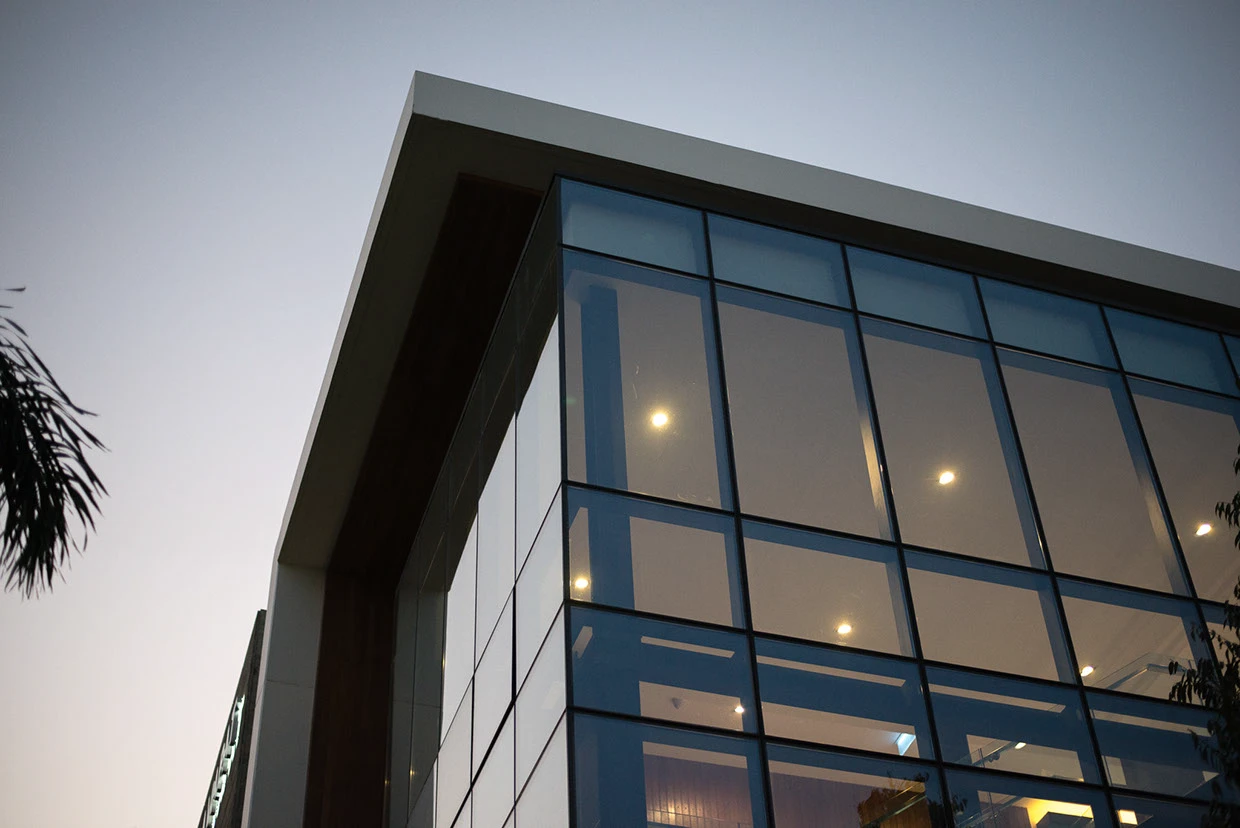
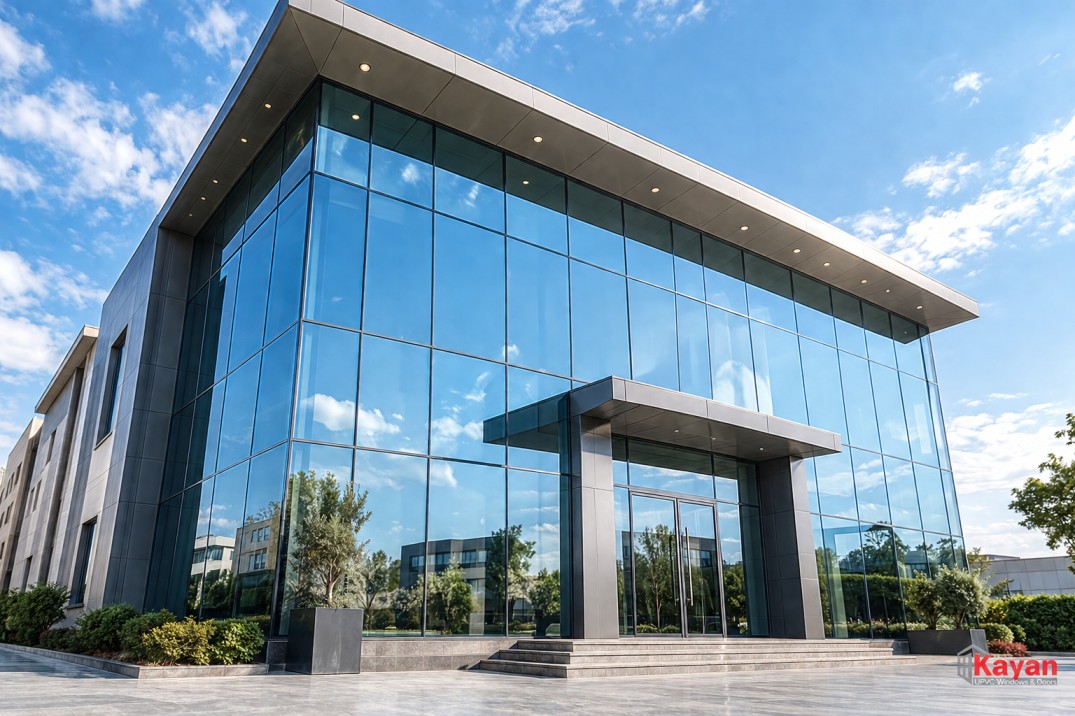
Curtain wall facades have become one of the most prominent solutions used in modern building design, especially in commercial and administrative projects, hotels, and buildings with large facades.
The role of curtain wall isn't limited to giving a building a modern look — it can also be a fundamental part of the facade's design and how light enters interior spaces, as well as playing a role in meeting various performance requirements based on the system's design and specifications.
A curtain wall system mainly relies on a structure of aluminum profiles combined with glass or other materials to form a complete exterior facade.
With the variety of systems and designs available, it's now possible to build different facades that suit a building's identity, nature, and project requirements.
In this guide, we cover the most important things to know about curtain walls, their uses, and how to choose the right system and implement it in a way that balances design and performance.
What Is a Curtain Wall?
A curtain wall is a lightweight facade system based on metal profiles, usually aluminum, fixed to the building's structure and carrying facade panels such as glass or certain types of cladding.
Curtain walls differ from traditional walls in that the facade doesn't function as a core part of the building's load-bearing structure — instead, it's designed and installed as an independent facade system connected to the structural frame.
The system's details vary from one project to another depending on the facade's dimensions, the type of glass, the installation method, and the design and performance requirements.
Why Is Curtain Wall Used in Building Facades?
The widespread use of curtain wall facades comes from their ability to achieve a modern architectural look while covering large facade areas with glass.
The system also allows for designing facades characterized by transparency and natural light, making it suitable for buildings that rely on large glass areas.
From a design perspective, curtain wall offers flexibility in distributing profiles and glass, allowing different shapes and facades to be created that suit the project's architectural identity.
Where Is Curtain Wall Used?
Aluminum curtain wall can be used in many types of buildings, especially projects that need wide, modern facades.
Some of the most common uses include:
- Administrative buildings and offices.
- Commercial centers and malls.
- Hotels.
- Commercial buildings.
- Exhibition halls.
- Institutions and companies.
- Some residential and mixed-use projects.
Choosing the right system depends on the nature of the building, the facade's requirements, dimensions, and the project's technical specifications.
Glass Curtain Wall
Glass is one of the most commonly used materials with curtain wall systems, and different types can be chosen based on design and use requirements.
Glass facades help bring natural light into interior spaces, while also giving the building a modern, open look.
However, choosing the glass shouldn't be based on appearance alone — the required specifications should be studied based on the nature of the project, the facade, its orientation, and the surrounding conditions of the building.
Aluminum and Glass Curtain Wall
Combining aluminum with glass is one of the most common forms of glass and aluminum facades.
Aluminum provides the structure and profiles that carry the facade's parts, while glass provides the transparent area that gives the building its distinctive look.
The layout of the profiles and glass can be controlled to achieve a design that suits the building's identity, whether the design relies on vertical or horizontal lines, or different geometric divisions.
What Are the Key Advantages of Curtain Wall?
The actual advantages vary depending on the system, design, and quality of execution, but some of the main reasons curtain wall suits many projects include:
Modern Design
Curtain wall gives buildings a modern look based on glass areas and clean metal profiles.
This makes it suitable for buildings that want a facade with a clear, distinctive architectural character.
Making the Most of Natural Light
Large glass areas allow natural light into parts of the building, which can be part of an interior design and lighting strategy.
Design Flexibility
Curtain wall design can be implemented with different divisions and dimensions based on the shape of the facade and the project's requirements.
This allows the architect to integrate the system with the building's overall design rather than treating it as a separate element.
Ability to Combine Different Systems
In some designs, curtain wall can be combined with other materials and systems in the facade, such as different types of glass or cladding, depending on the design and technical specifications.
How to Choose the Right Curtain Wall Design
Choosing the design doesn't start with the facade's shape alone — a range of factors related to the project need to be studied.
Building Shape
The facade's divisions should match the building's architectural lines.
A simple-design facade may need different divisions than a building with more distinct geometric details.
Facade Area
The larger the facade area, the more important it becomes to study the divisions, profiles, and measurements.
The dimensions of the glass units and profiles should be determined in a way that suits the design and required specifications.
Glass Type
The choice of glass affects the facade's final look, as well as the required performance properties.
Different types of glass can be used based on the nature and needs of the project, with the right specifications determined technically.
What's the Difference Between Curtain Wall Systems?
There are different curtain wall systems, and the way the facade is manufactured, assembled, and installed can vary from one system to another.
Stick System
This system relies on assembling and installing the profiles at the project site, then fitting the glass or facade panels within the system.
It can be suitable for certain projects where the nature of the facade allows this type of installation.
Unitized System
The unitized system relies on manufacturing and assembling larger facade units beforehand, then transporting them to the site and installing them on the building.
Choosing this system over another depends on the project's size, the facade's dimensions, site conditions, and installation requirements.
No single system can be considered suitable for every project — the choice should be based on studying the project and its technical specifications.
The Importance of Insulation in Curtain Wall Facades
One of the most important things to consider when designing and installing curtain wall facades is handling the points where glass, profiles, and the various facade parts meet.
The system should be designed to meet water and air leakage prevention requirements, in addition to addressing details that can affect the facade's performance.
Insulation and performance requirements also vary from one project to another, so they should be determined within the design and specifications before installation.
How Does Glass Choice Affect the Facade?
Glass makes up a large portion of a curtain wall facade, so it clearly affects the final appearance.
Choosing the type of glass can also be linked to factors such as transparency, privacy, light transmission, and thermal or acoustic control requirements based on the needed specifications.
That's why glass shouldn't be chosen based on color or appearance alone — it should be part of a comprehensive study of the facade.
The Importance of Aluminum Profile Quality
Aluminum profiles are a fundamental part of the curtain wall system, so they should be chosen based on the system and specifications specific to the project.
Attention should also be paid to the quality of manufacturing, cutting, assembly, and fixing, since the precision of these stages affects the facade's final result.
It's also important to make sure the profiles are compatible with the glass, accessories, and other system components.
Don't Focus on Looks and Forget Performance
A common mistake in facade design is focusing only on the exterior look.
A good facade needs to achieve a balance between design and performance, which includes studying the glass, profiles, fixing, insulation, drainage, and execution details.
A particular design may seem visually suitable, but may need technical adjustments to fit the nature of the building and the project's requirements.
That's why the facade should be studied from both an architectural and technical perspective at the same time.
The Importance of Measurement Accuracy in Curtain Wall
Given the large size of curtain wall facades and the complexity of some of their details, measurement accuracy is one of the most important stages of installation.
The facade's dimensions, along with the location of columns, beams, and fixing points, should be studied before manufacturing begins.
Any discrepancy in measurements can affect the installation of the profiles and glass, so accurate, verified measurements should be relied on before manufacturing.
Can Curtain Wall Be Designed According to the Building?
Curtain wall systems can be designed and installed based on the facade's dimensions and shape, taking into account the system's requirements and the structural and architectural design.
The process usually starts with studying the facade, determining the divisions and dimensions, then choosing the right profiles, glass, and details before manufacturing and installation.
This allows for creating a facade that's compatible with the building's architectural identity, rather than relying on a ready-made design that doesn't fit the project.
Mistakes to Avoid When Installing Curtain Wall
There are some mistakes that can affect the quality and performance of the facade, including:
- Choosing the system based on appearance alone.
- Using profiles unsuitable for the nature of the facade.
- Not studying the glass type before installation.
- Relying on approximate measurements.
- Neglecting insulation and drainage details.
- Not properly studying the fixing points.
- Focusing on price and neglecting component quality.
- Not paying attention to accessory quality and execution details.
- Installing the facade without reviewing the design and measurements before manufacturing.
- Hiring a team not specialized in curtain wall systems.
How to Choose a Curtain Wall Installation Company
When choosing curtain wall companies to install your project's facade, don't let price be the only factor in your comparison.
Pay attention to the company's experience in installing similar facades, the quality of the aluminum profiles and glass, and the accuracy of measurements, manufacturing, and installation.
It's also a good idea to look at their portfolio and real completed projects, especially if your project involves a large facade or special designs.
The company should be capable of handling the architectural, technical, and execution aspects of the project in an integrated way.
Curtain Wall from Kian Engineering Works
Kian Engineering Works offers specialized solutions in curtain wall work and glass and aluminum facades, suited to the nature and design of each project.
Facade installation starts with studying the building and the facade's dimensions, then determining the divisions, system type, profiles, glass, and appropriate technical details.
Whether the project is an administrative building, a commercial building, a hotel, or a mixed-use facility, studying the facade before installation helps achieve a solution that combines architectural design, performance, and execution quality.
Conclusion
Curtain wall has become more than just a system for covering a building's facade — it's an element that can help shape the architectural identity and highlight the exterior design.
By combining aluminum and glass and choosing the right system and divisions, facades can be built that combine a modern look, the benefits of natural light, and various performance requirements.
That's why choosing a curtain wall should start with studying the building and the facade, not just the appearance or price, while paying attention to the type of glass, profiles, fixing, insulation, and execution quality.
This way, you can achieve a facade that balances beauty, performance, and function, becoming a genuine part of the building's identity.
Contact Kian Engineering Works for a consultation, site visit, and to choose the right curtain wall system for your project's design and facade.
Frequently Asked Questions
What is a curtain wall?
A curtain wall is a facade system mainly based on metal profiles, usually aluminum, fixed to the building's structure and carrying glass or other facade materials.
Where is curtain wall used?
Curtain wall is used in many types of buildings such as offices, administrative buildings, commercial centers, hotels, commercial projects, and mixed-use buildings.
Can glass be used with curtain wall?
Yes, glass is one of the most commonly used materials with curtain wall systems, and its type and specifications can be chosen based on the facade's design and the project's requirements.
What's the difference between the Stick and Unitized systems?
The Stick system relies more on assembling and installing facade parts at the site, while the Unitized system relies on manufacturing and assembling larger units beforehand, then installing them on site. The choice between the two depends on the nature and design of the project.
Can curtain wall be designed according to the building?
Yes, a curtain wall system can be designed based on the facade's dimensions and shape, taking into account the system's requirements, technical specifications, and the project's architectural and structural details.
What's the most important thing to consider when choosing a curtain wall company?
Attention should be paid to the company's experience, the quality of the aluminum profiles and glass, the accuracy of measurements, manufacturing, and installation, as well as their portfolio and ability to execute the project's technical details.